ABA vs Speech Therapy for Nonverbal 2-Year-Olds: A Parent's Guide
In short: ABA and speech therapy serve different but complementary roles for nonverbal 2-year-olds. ABA focuses on building functional communication through behavior analysis, while speech therapy targets specific speech and language skills. Many families combine both. ABA For My Child helps you find free matching with BCBA-led providers that accept insurance and Medicaid.
Key takeaways
- ABA therapy uses positive reinforcement to teach communication skills like requesting and labeling.
- Speech therapy directly targets articulation, oral motor skills, and language comprehension.
- A nonverbal 2-year-old often benefits from an integrated approach involving both therapies.
- Insurance (including Medicaid) typically covers ABA and speech therapy for autism.
Understanding the Two Therapies
When your 2-year-old is not yet speaking, the options can feel overwhelming. Applied Behavior Analysis (ABA) and speech-language pathology (speech therapy) are two of the most common interventions, but they work in very different ways. It helps to understand the foundation of each before deciding where to start.
What Is ABA Therapy?
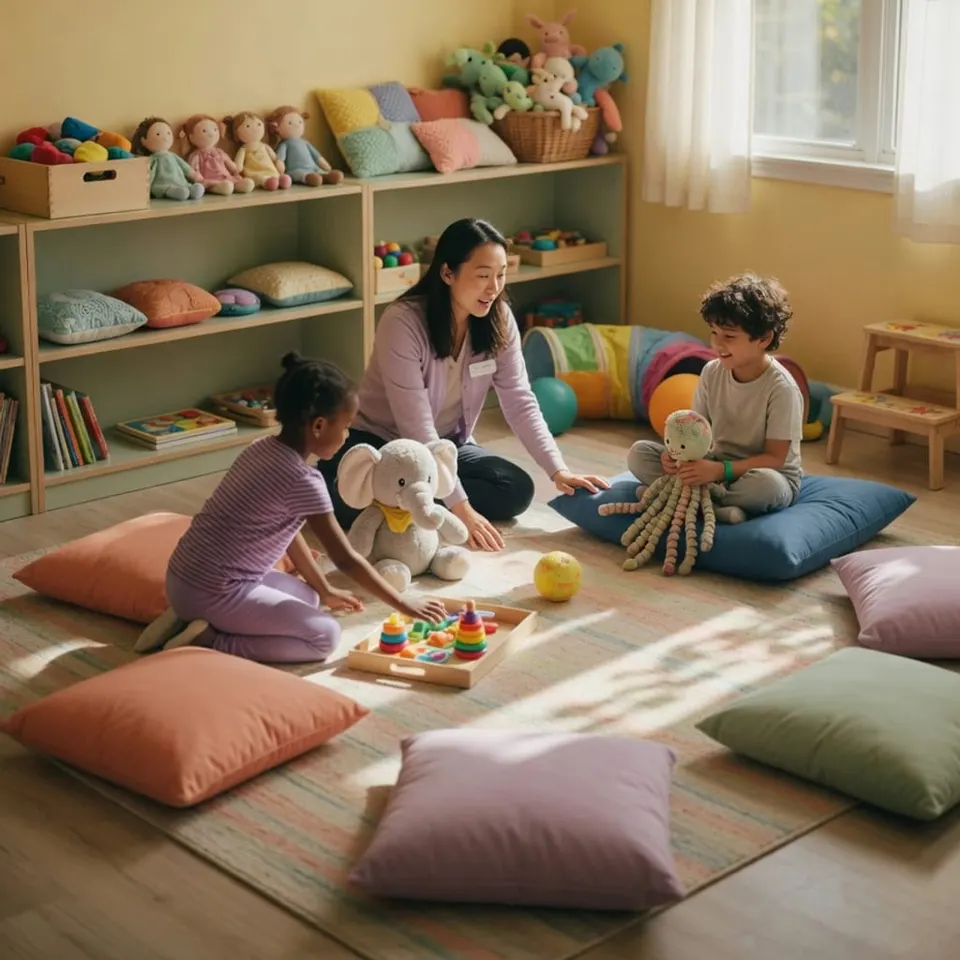
ABA is a data-driven, evidence-based therapy that focuses on understanding and changing behavior. For a nonverbal toddler, an ABA therapist (typically a Board Certified Behavior Analyst, or BCBA) breaks down communication into small, teachable steps. For example, the therapist might teach a child to point to a desired toy, then to say a sound, and eventually to use a picture exchange system or a speech-generating device. ABA uses positive reinforcement to encourage these new skills. Many ABA programs for young children are play-based and happen in the home or a clinic. Most insurance plans, including state Medicaid programs, cover ABA therapy for children with an autism diagnosis. ABA For My Child is a free service that can match you with BCBA-led providers in your area who accept your insurance.
What Is Speech Therapy?
Speech therapy, provided by a licensed speech-language pathologist (SLP), directly targets communication. An SLP evaluates a child's receptive language (what they understand), expressive language (what they can say or sign), and oral-motor skills (how the mouth moves). For a nonverbal 2-year-old, speech therapy might include teaching sign language, using picture cards, or working on making specific sounds. The SLP also addresses feeding and swallowing if needed. Speech therapy is often covered by insurance and Medicaid, especially when a child has a diagnosis that affects communication, such as autism or a speech delay.

🔗 Related reading: Verify ABA Provider Credentials in California · Find ABA Near Me
Key Differences at Age 2
While both therapies aim to improve communication, they use different methods and focus on different outcomes. Understanding these differences can help you choose the right path for your child.
Goals and Approaches
ABA therapy sets goals based on functional skills. For a 2-year-old who is nonverbal, a goal might be: "The child will request a preferred item by handing the parent a picture card in 4 out of 5 opportunities." The therapist collects data every session to track progress. Speech therapy goals are more likely to target specific speech or language milestones, such as "The child will imitate two consonant-vowel combinations (e.g., 'ba', 'da') with 80% accuracy." Both can work together seamlessly.
Communication vs. Behavior
ABA sees communication as behavior. If a child cries to get a toy, that's a behavior that can be replaced with a more functional communication skill. Speech therapy looks at the underlying mechanics and linguistic structure. For a child who is not yet speaking, ABA might first focus on reducing challenging behaviors that interfere with learning, while speech therapy might focus on building the oral motor skills needed to produce speech. Neither is better-they are complementary.
How They Complement Each Other
Many families find that ABA and speech therapy work best together. For example, the BCBA can set up a structured environment where the child practices requesting using a picture exchange system. The SLP can then help the child transition from pictures to vocalizations. A combined approach often leads to faster progress. The key is to ensure the providers communicate with each other. Some clinics even offer both services under one roof. Even if they are separate, a BCBA and an SLP can coordinate goals so the child is not receiving mixed messages. ABA For My Child can help you find BCBA-led providers who are experienced in collaborating with speech therapists.

🔗 Related reading: Combining ABA, Speech & OT in Florida: A Guide · Nearby ABA Therapy
Which One Should You Choose First?
For a nonverbal 2-year-old with an autism diagnosis, many experts recommend starting with ABA therapy first. Why? Because ABA addresses foundational skills like sitting, attending, and imitating-skills that a child needs to benefit from speech therapy. Without those building blocks, speech therapy may be less effective. That said, if your child has a suspected speech delay without autism-related behaviors, speech therapy might be the first step. There is no one-size-fits-all answer. A comprehensive evaluation by a developmental pediatrician, a BCBA, and an SLP can guide you. In the meantime, you can start with free matching through ABA For My Child to explore BCBA-led providers who will assess your child's specific needs.
Insurance and Cost Considerations
Coverage for ABA and Speech Therapy
Good news: both ABA and speech therapy are commonly covered by insurance, including through state Medicaid programs and the Children's Health Insurance Program (CHIP). For ABA, you typically need an autism diagnosis and a referral. Speech therapy may be covered under a broader set of diagnosis codes, including speech or language delay. Some insurance plans have limits on the number of visits per year for speech therapy, while ABA often has more flexible coverage. ABA For My Child can help you check what your specific plan covers and find providers who accept it.
How ABA For My Child Can Help
As a free matching service, ABA For My Child connects you with BCBA-led ABA providers who are vetted for quality. We work with practices that accept most major insurance plans and Medicaid. We do not charge you anything, and we do not favor one provider over another. Our goal is to help you find a provider who understands your child's communication needs and can coordinate with other therapists, including speech-language pathologists. Fill out a short form, and we will share your information with local, qualified providers who can schedule an assessment.
Practical Tips for Getting Started
Steps to Take
- Start by getting a formal diagnosis if your child does not already have one. A developmental pediatrician or a child psychologist can evaluate for autism or other conditions.
- Contact your insurance company to confirm coverage for ABA and speech therapy. Ask about deductibles, copays, and any pre-authorization requirements.
- Use ABA For My Child to get matched with BCBA-led providers near you. You can also ask your pediatrician for recommendations.
- Schedule an initial assessment with both an ABA provider and a speech therapist if possible. Many providers offer free consultations.
- Set up a team meeting between providers to align goals and strategies.
Questions to Ask Providers
- How do you involve parents in therapy sessions? (Parent training is a key part of ABA and often included in speech therapy.)
- Do you have experience working with nonverbal toddlers?
- How do you measure progress? Can I see data sheets or videos?
- Do you accept my insurance and Medicaid?
- How do you coordinate with other therapists, such as an SLP or occupational therapist?
Common Mistakes to Avoid
Waiting too long to start. Early intervention is critical. Age 2 is not too early for ABA or speech therapy. Delaying can mean missing a window of rapid brain development.
Choosing one over the other without guidance. A good initial assessment from a BCBA can tell you if ABA is the right fit, and an SLP can tell you if speech therapy alone might be enough. Do not self-diagnose the approach.
Focusing only on spoken words. A nonverbal child can communicate through signs, pictures, or devices. Both ABA and speech therapy support that. Encourage all forms of communication.
Not checking insurance coverage ahead of time. Surprise bills are stressful. Use ABA For My Child to connect with providers who verify your benefits.
Ignoring the emotional needs of your child and family. Both therapies should be child-led and positive. If a provider uses harsh or coercive techniques, that is a red flag. Look for compassionate, play-based approaches.
Conclusion
Choosing between ABA and speech therapy for your nonverbal 2-year-old does not have to be an either-or decision. Both offer powerful tools to help your child communicate. ABA builds the foundation of learning and replaces challenging behaviors with functional skills, while speech therapy hones in on the specific sounds and language structures. Many children thrive with both. Start by getting a professional evaluation, explore your insurance benefits, and use a free service like ABA For My Child to find vetted BCBA-led providers who can work alongside speech therapists. You are not alone in this journey, and the right support can make a world of difference for your family.